It runs DOOM. It also runs Minecraft.
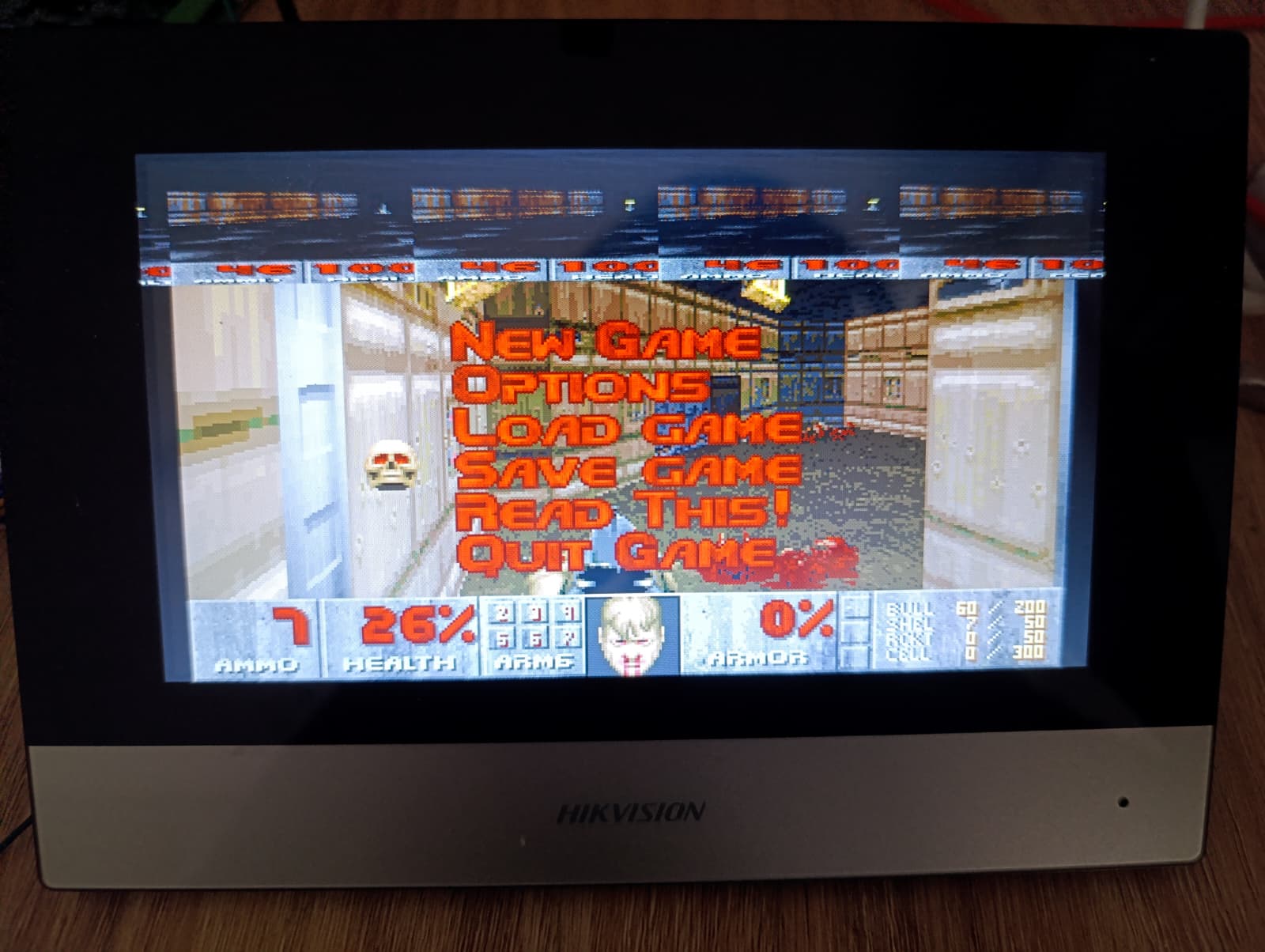
The Hikvision DS-KH6320-WTE1 is a wall-mounted video intercom “indoor station” — the panel inside the front door that shows you who’s outside, lets you buzz them in, and otherwise sits there running a locked-down vendor GUI on a Linux system nobody’s supposed to touch. It has a 1024×600 resistive-adjacent touchscreen, an ARM SoC, and — it turns out — just enough headroom to run DOOM and a Minecraft server, once you get root.
This is the write-up of doing exactly that: chip-off flash extraction, turning the vendor’s restricted debug console into a shell, and then finding where the framebuffer lives, to make a resistive touch panel behave like a D-pad, and squeezing a Java-protocol Minecraft server onto this hardware.
Getting a shell: chip-off, and turning psh into sh
Like most Hikvision embedded products, this device doesn’t hand out a
console for free. The serial port on the board does drop you to a shell
prompt — but that shell is psh, a restricted vendor binary that gates
anything useful behind an RSA challenge-response only Hikvision itself can
answer. /etc/profile execs straight into it on every login, UART or
otherwise, so short of the private key, a stock unit’s console is a dead
end.
Getting past that started at the flash chip, not the console.
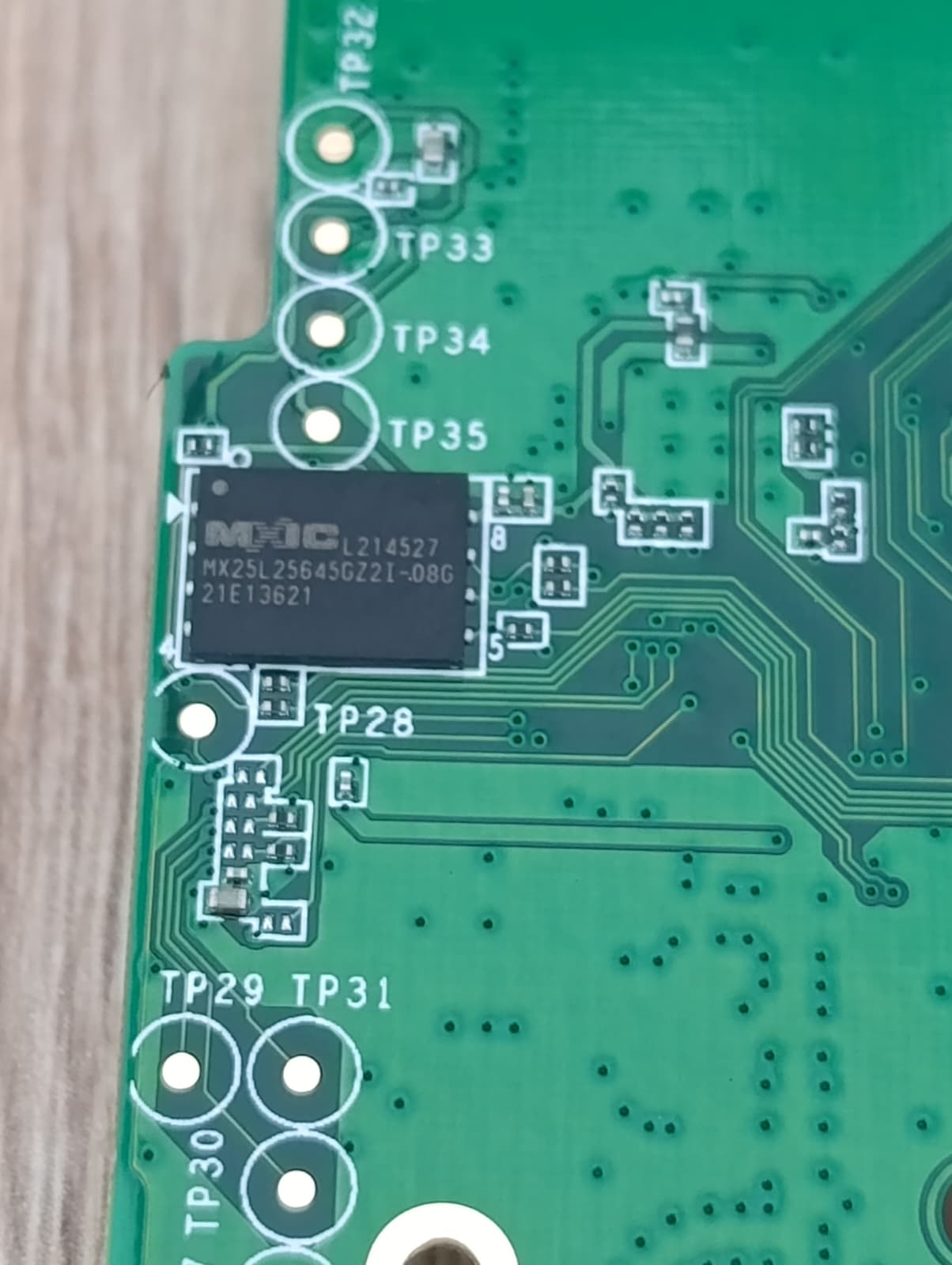
The device’s entire persistent storage: one Macronix MX25L25645GZ2I-08G, 32 MB SPI NOR flash
1. Chip-off. The device’s entire persistent storage is a single Macronix 32 MB SPI NOR flash IC, sitting exposed on the back of the mainboard. Using hot-air, it was desoldered and read directly with a flash programmer, and it gives a complete, bit-for-bit image of everything the device boots from — bootloader, kernel, root filesystem, application binaries. That image is what makes everything downstream possible: it can be studied, patched, and reflashed offline, with zero risk to a running unit until a rewritten image is actually written back.
2. Finding the actual boot path. The root filesystem here is a
RAM-loaded initrd, rebuilt fresh from the flash image on every boot, and
it’s mounted read-write at runtime. A boot script runs
early in the init sequence, before the console shell ever spawns and
sources /etc/profile. That script is itself obfuscated on flash, using
an encryption scheme that turned out to lean on a single key baked
directly into a kernel module, recoverable by disassemblying it.
Using that key, the boot script can be decrypted,
edited, and re-encrypted well enough to pass the device’s own check on the
way in.
3. The actual patch. No binary got replaced — the fix is smaller than
that. One line, inserted near the top of the (re-encrypted) boot script,
strips the /bin/psh invocation out of the in-memory copy of
/etc/profile before the console shell ever reads it:
if [ -f /etc/profile ]; then
    awk '!/^\/bin\/psh/' /etc/profile > /tmp/.profile.nopsh \
      && cat /tmp/.profile.nopsh > /etc/profile
fi
Nothing on flash changes structurally — the ramdisk itself is untouched, only this one boot script differs, and the edit above is redone in RAM on every single boot. Since the root filesystem gets rebuilt from the (unmodified) flash image every time anyway, this is about as close to a reversible modification as an embedded device gets. Flash the original image back and the device is exactly as it shipped.
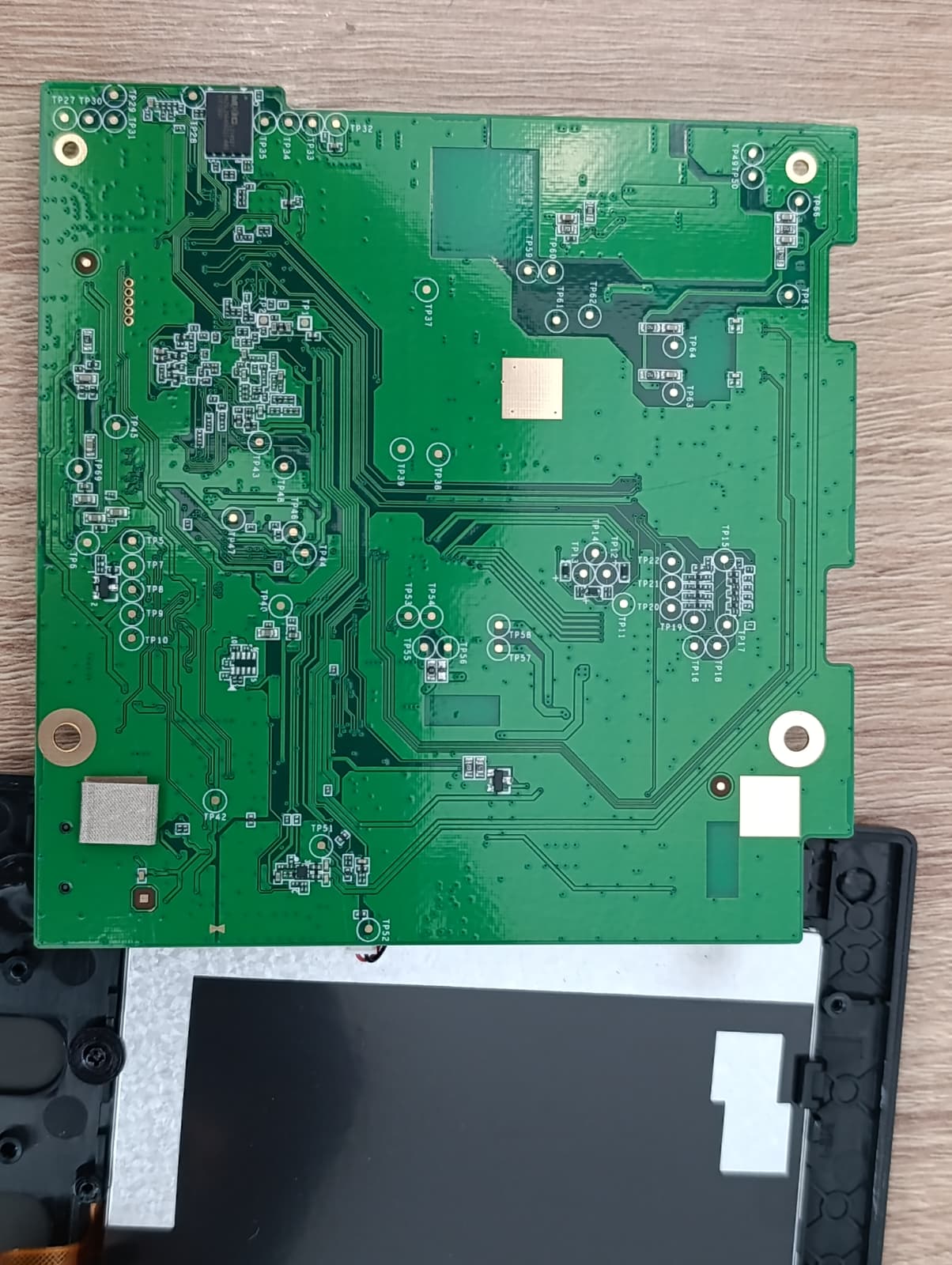
The same mainboard, back in the unit — panel connector, test-point grid, and the console header this whole console-access step runs over.
[root@dvrdvs] # prompt. id reports
uid=0(root). No login, no password, no vendor key required —
because the device is, at this point, unmistakably yours.
That console is also the delivery mechanism for everything that follows.
The device ships with its own tftp client, so cross-compiled binaries get
pushed over from a bench host and launched straight from the UART shell —
no network stack changes, no SSH daemon needed, just TFTP in and a shell
command to run it.
Porting DOOM to a door-intercom touchscreen
The obvious first target, because it’s the obvious first target for any
embedded Linux device with a framebuffer. The port used is
doomgeneric’s linuxvt backend —
pure framebuffer plus evdev, no X11, no SDL — cross-compiled statically
for ARM EABI5, since this device runs uClibc and
almost nothing built for a normal glibc host will run on it unmodified.
Getting a static binary onto the device turned out to be the easy part. Getting a picture out of it was where the actual work was.
Finding — and actually writing to — the framebuffer
The device exposes /dev/fb0 for the Linux framebuffer console,
and the first working build wrote to it exactly the way every framebuffer
tutorial says to: mmap() the device, memcpy() pixel data into it, done.
Every diagnostic said this was working — the process stayed alive at a
believable frame rate, and reading the mapped memory back showed real,
changing, DOOM-palette pixel data on every frame.
The panel stayed black.
mmap() only updates the backing memory — it does not
by itself push anything to the display controller. A plain
write() to /dev/fb0 does trigger a real update
(confirmed by writing raw noise to the device directly), but
doomgeneric, like most framebuffer software, only ever
mmap()s and memcpy()s. The fix is one ioctl call
— FBIOPAN_DISPLAY — issued once after the initial buffer setup
and again at the end of every drawn frame. That call is what actually
forces the panel to latch the new buffer; nothing about what gets
written needed to change, only the missing commit afterward.
With that one ioctl added, arbitrary pixel data started reaching the
physical panel for the first time — proven with the simplest possible
test before ever pointing DOOM at it: pushing an ordinary photo straight
into /dev/fb0 and watching it actually appear on the glass.
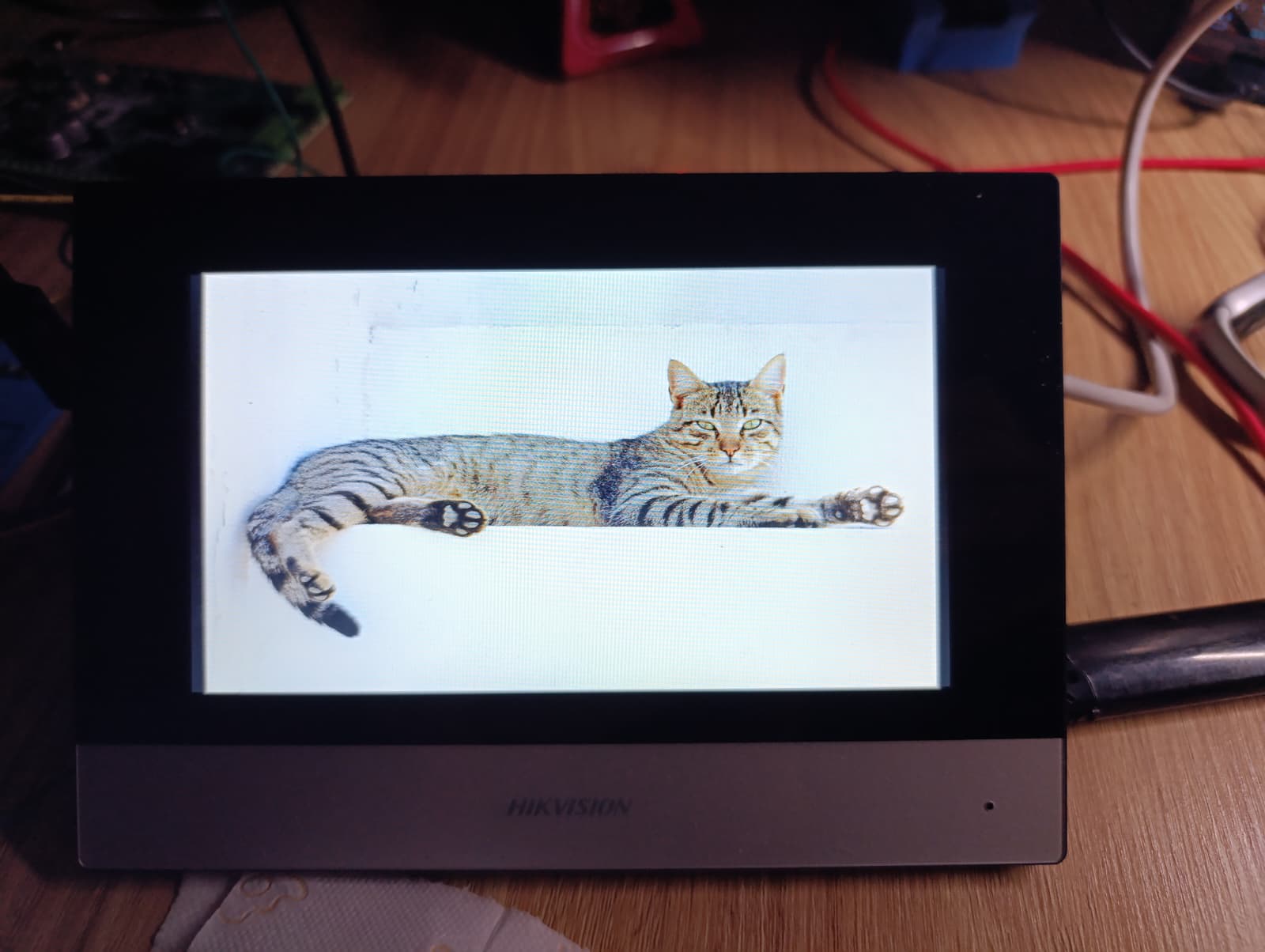
First real proof the panel was listening: a plain photo, pushed straight
into /dev/fb0 after the FBIOPAN_DISPLAY fix, showing up correctly on
the actual glass.
Making the panel a controller
doomgeneric’s linuxvt backend only ever implemented keyboard input —
it has a stub concept of touch, but its actual device scanner looks for a
keyboard’s key set and silently ignores anything that only reports
EV_ABS coordinates, which is all a touch panel ever sends. On a device
with no keyboard at all, that meant the build failed outright at startup
with “no compatible input device found.”
Real touch support meant:
- Detecting the touchscreen deliberately, rather than assuming it —
checking for the
EV_ABS+ABS_X/ABS_Y+BTN_TOUCHcombination evdev reports, and reading the panel’s own declared coordinate range viaEVIOCGABSinstead of guessing it matches screen pixels. (It happens to: this panel reports0–1024×0–600, i.e. native pixel space, so no calibration scaling was actually needed here — but the code doesn’t assume that.) - A fixed on-screen control scheme, since the panel only reports a single point of contact at a time — no multi-touch. Six zones laid over the rendered frame stand in for a D-pad and two action buttons:
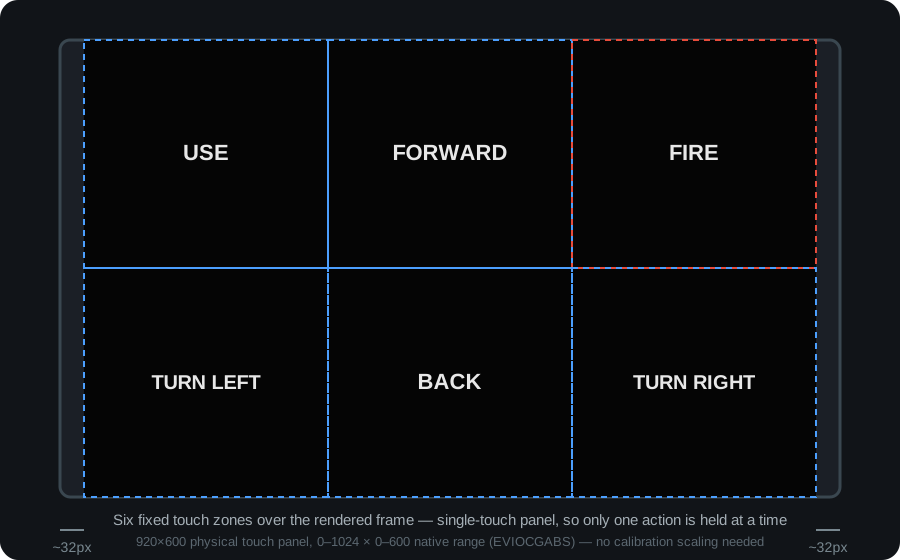
Moving a finger off one zone releases it, and entering a new one presses
that action — the same behaviour as a real d-pad, just drawn in software
rather than existing as a physical control. Confirmed working end-to-end,
not just at the event-detection level: dropped directly into a level with
-warp 1 1, tapping FORWARD visibly walks the player, and FIRE discharges
a weapon.
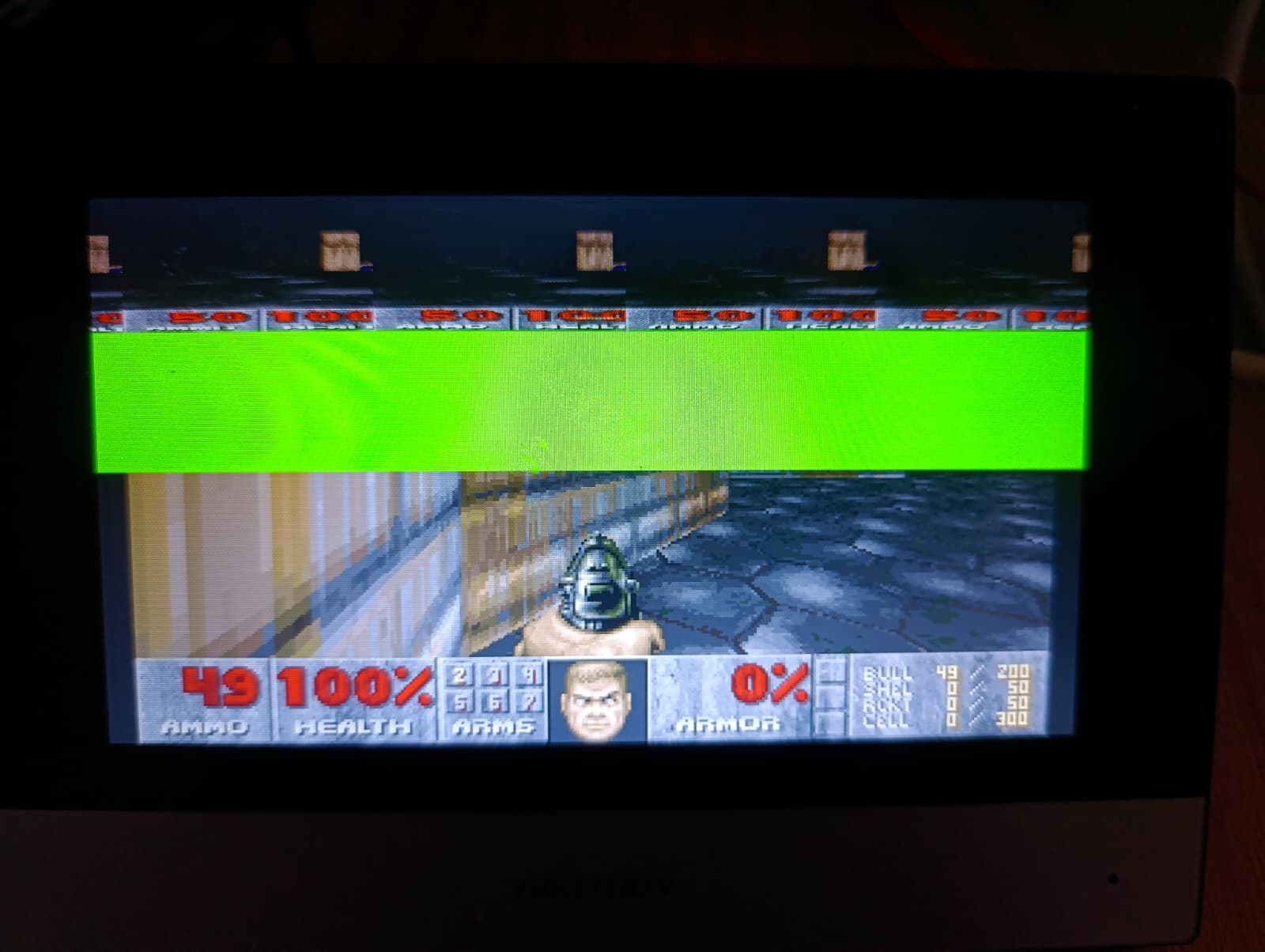
Touch-controlled gameplay in E1M1 — the green band near the top is the tearing artifact covered next, not a touch-control issue.
The known bug: colours are off, and the picture is shifted
FBIO_WAITFORVSYNC ioctl appears to be a stub
that reports success without actually blocking on real display timing.
The result is a classic tearing artifact: a frame can get committed
mid-scan, so a moving image shows a visible horizontal split, and static
content can appear shifted by a partial-frame offset. The colour palette
reads slightly muted for the same underlying reason — confirmed by writing
known-good static test patterns straight to the framebuffer (vivid,
perfectly accurate colours, zero shift) versus the same content going
through doomgeneric's continuous per-frame commit loop (same
palette, visibly duller). The panel, the pixel format, and the colour path
are all confirmed correct in isolation; it's specifically continuous,
unsynchronised writes that produce the artifact.
The real fix is proper double buffering — render into an off-screen buffer and pan to it only once a frame is complete — but that needs more video RAM than this framebuffer currently has allocated, which is a bigger change than a userspace program can make on its own. Filed as future work rather than papered over.
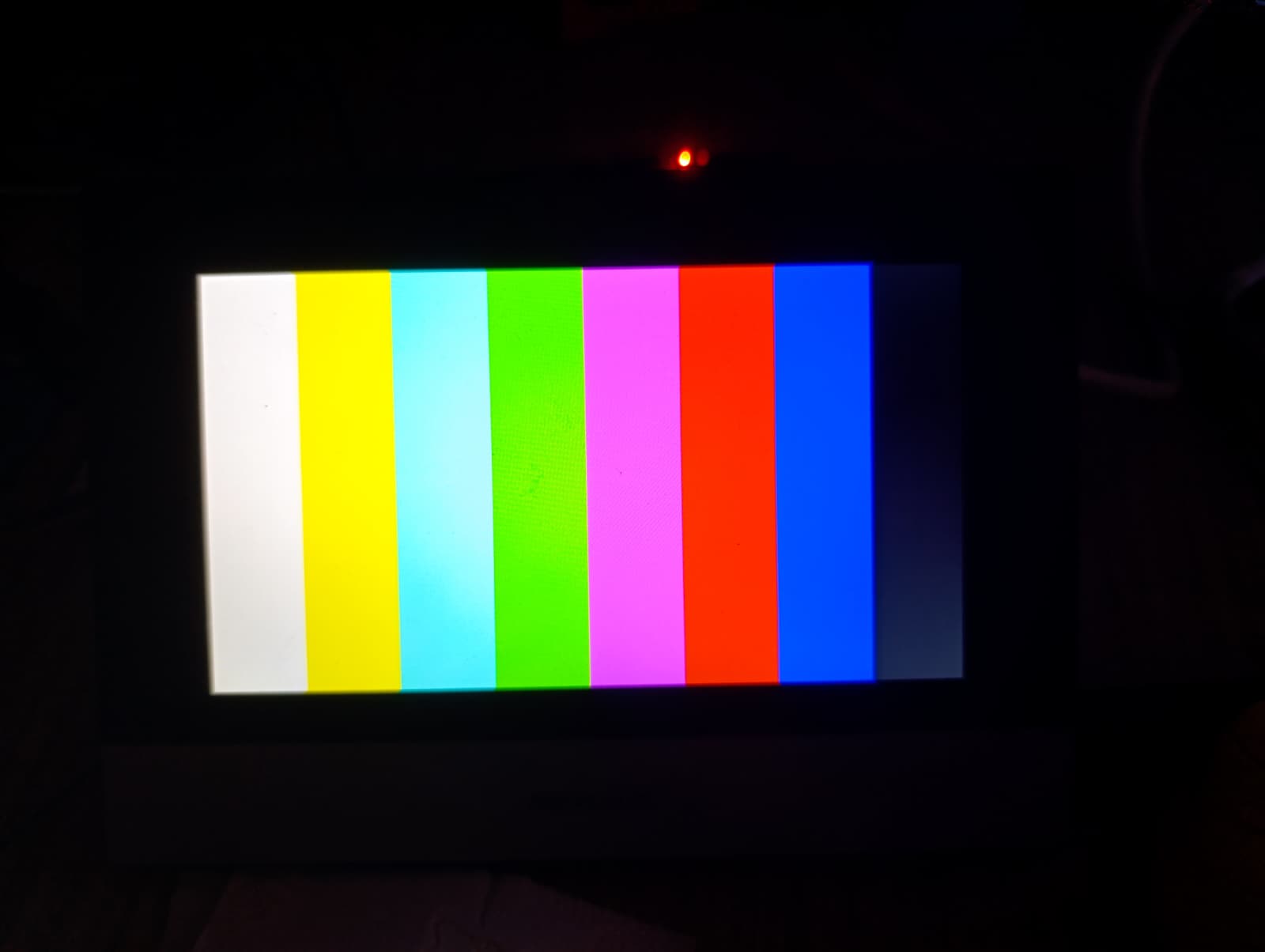
The control test referenced above: a plain colour-bar pattern, written
directly and once — no continuous per-frame commits. Vivid, accurate,
zero shift. This is what confirms the artifact belongs to
doomgeneric’s write pattern, not to the panel or the pixel
format.
Getting here wasn’t a straight line. An earlier attempt at fixing the video path — re-latching the display mode on every frame — looked clean in isolated testing and then produced this on the very next real run:
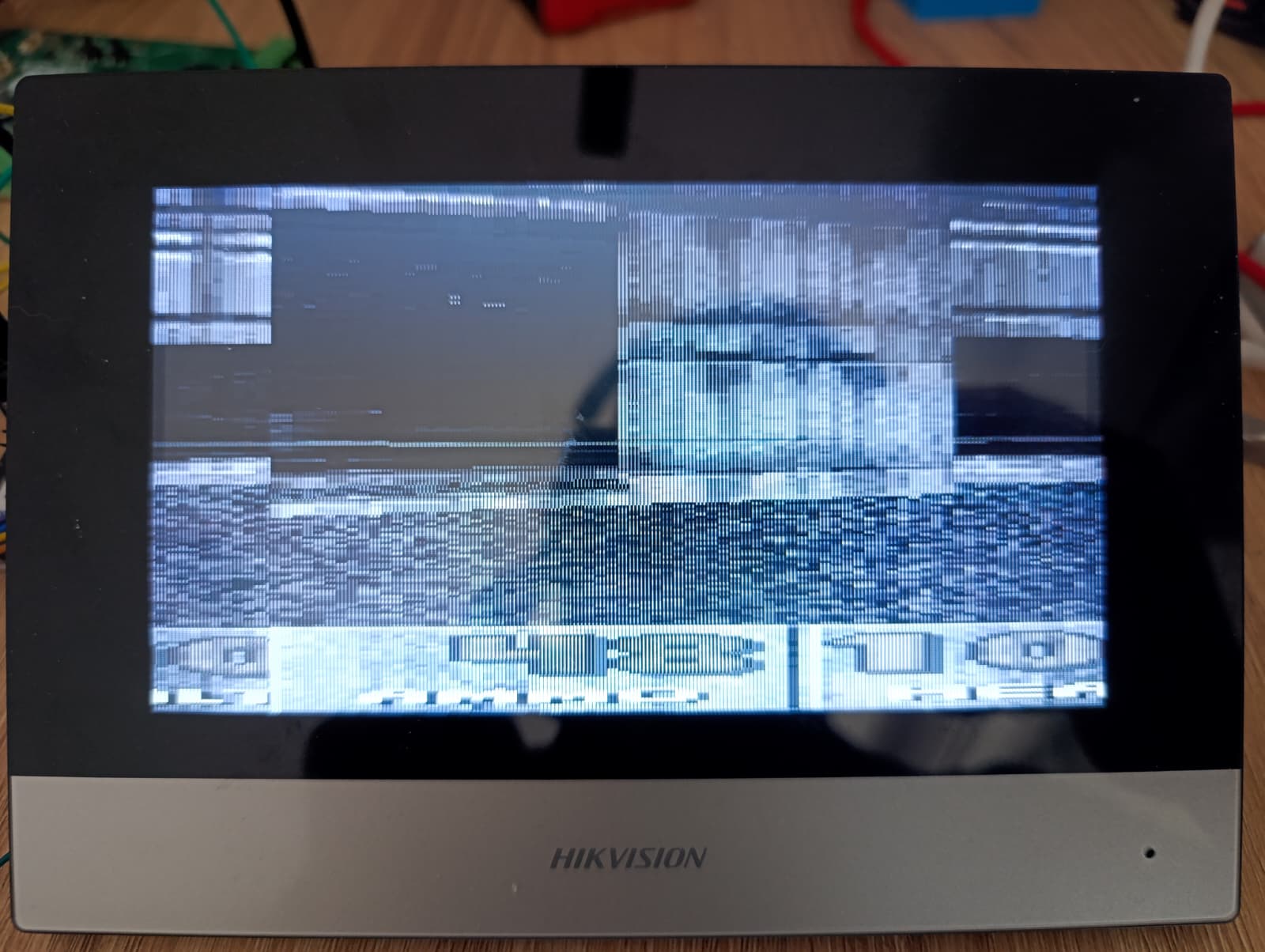
An earlier, more aggressive fix attempt, mid-failure. Traced to a mode-set ioctl that turned out to be non-deterministic on this hardware — it passed clean tests twice before corrupting output the third time for no input-side reason. Reverted outright rather than chased further; the tearing bug above is the one that remains, not this one.
Then: a Minecraft server, on the same hardware
Once DOOM proved the toolchain and the deployment path both worked, the natural next target was something with a very different resource profile: a real, current-protocol Minecraft Java Edition server. Hand-rolling a server from the wire protocol was tried first and abandoned early — not because it’s impossible, but because reimplementing a modern Minecraft protocol from scratch on a device this constrained is a much bigger undertaking than porting an existing one. The project switched to UCraft, an MIT-licensed Minecraft server written in plain C specifically for resource-constrained machines, cross-compiled with the same static ARM toolchain used for DOOM.
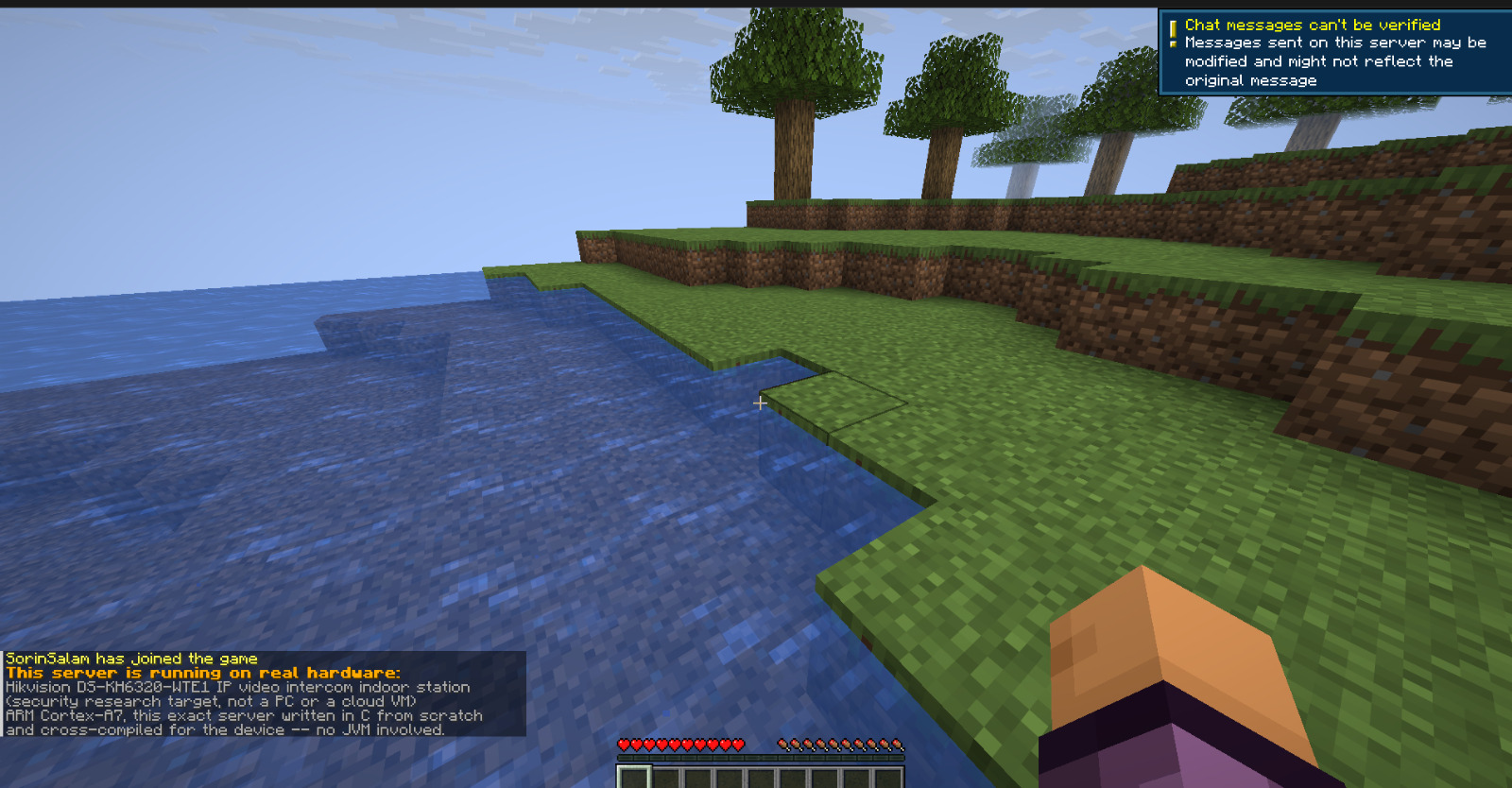
The join banner says it plainly, because a screenshot alone wouldn’t be believable: “This server is running on real hardware: Hikvision DS-KH6320-WTE1 IP video intercom indoor station… this exact server written in C from scratch and cross-compiled for the device — no JVM involved.”
It works — a real client, connecting normally. Point the official Minecraft Launcher at the device’s address on the matching protocol version, and it shows up in the multiplayer list with a custom MOTD, accepts the connection in offline mode, and spawns the player into a real, non-flat world — hills, caves, ore veins, the works, generated by actual 3D Perlin noise rather than a flat superflat placeholder.
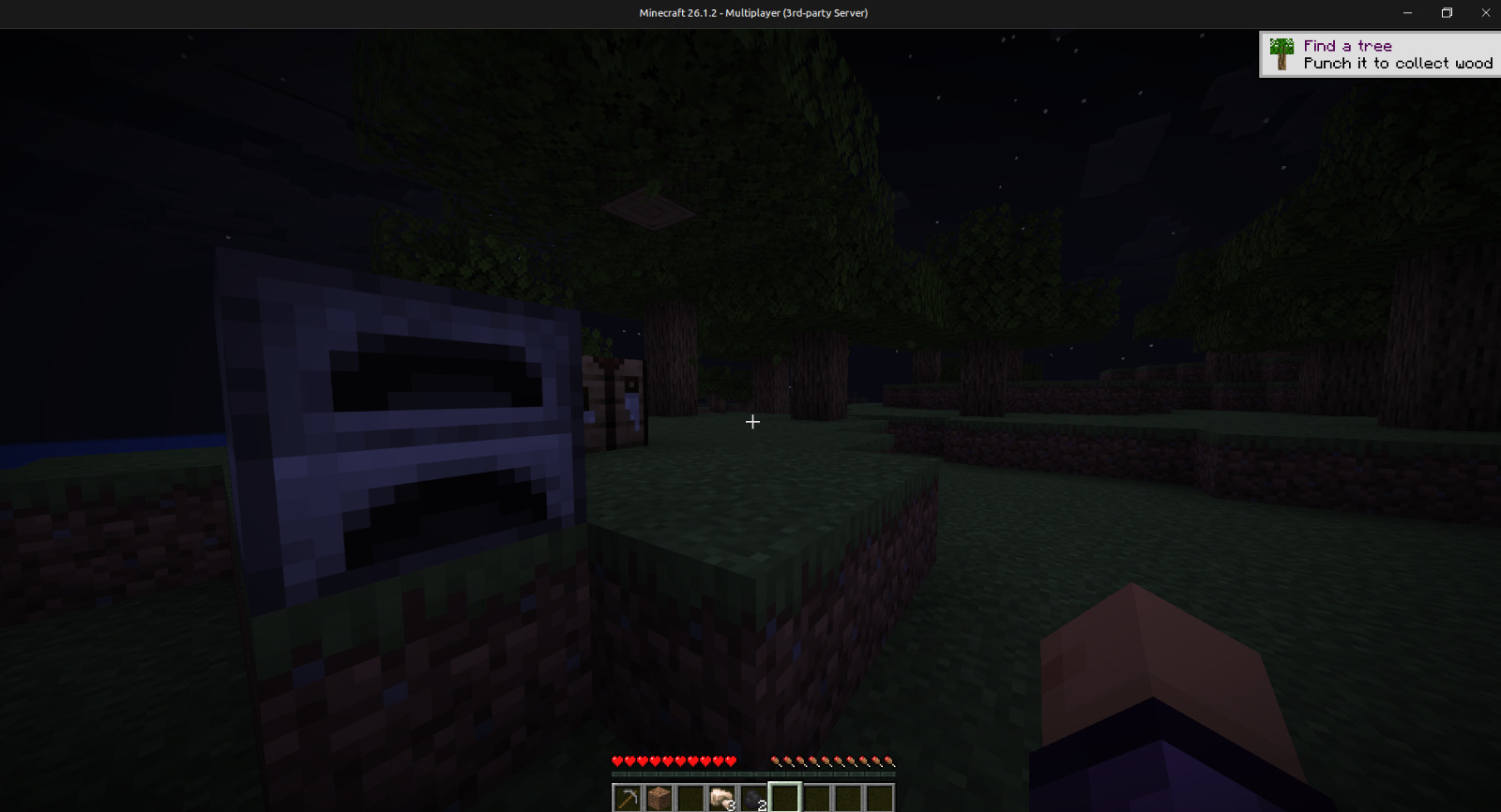
A few things mattered more than expected:
- Protocol version has to match exactly. Minecraft’s wire protocol changes between even adjacent versions in ways that aren’t always obvious from the outside — a client one version off gets partway through login before the connection dies on a decode error. The server config has to be pinned to precisely the protocol number the connecting client actually speaks.
- The device’s own single ARM core is the real constraint, not RAM. With the vendor’s own GUI process killed to free headroom, the server itself runs comfortably inside about 30 MB, but chunk generation — Perlin noise evaluated per-column — is CPU-bound work on a 1 GHz single core, and it’s the first thing to show strain under load, not memory pressure.
- Storage has to survive a reboot the root filesystem can’t. Because the root filesystem is rebuilt from flash on every boot, anything written to it — including a freshly placed server binary — evaporates the moment the device restarts. The fix is the same one every embedded Linux hack reaches for eventually: an inserted 8 GB microSD card, mounted separately from the RAM-backed root filesystem, holds the server binary and world data persistently across reboots. The running process still has to be relaunched by hand after a restart — this device has no init mechanism left available to autostart it — but the data itself no longer disappears.
What’s left
Both ports are functional, not finished. The known open items:
- DOOM’s tearing/colour-shift artifact — needs real double buffering, which needs more framebuffer memory than is currently allocated to it.
- No sound — a real ALSA-based mixer was built and links cleanly, but the vendor GUI process holds the sound codec’s one playback substream exclusively for as long as it’s running.
- No on-screen button graphics for the DOOM touch zones — currently invisible, functional-only overlays.
None of it changes the headline: a locked-down commercial door intercom, running a 30-year-old first-person shooter and a modern Java game server, on hardware whose entire job description was supposed to be “show a video feed and unlock a door.”